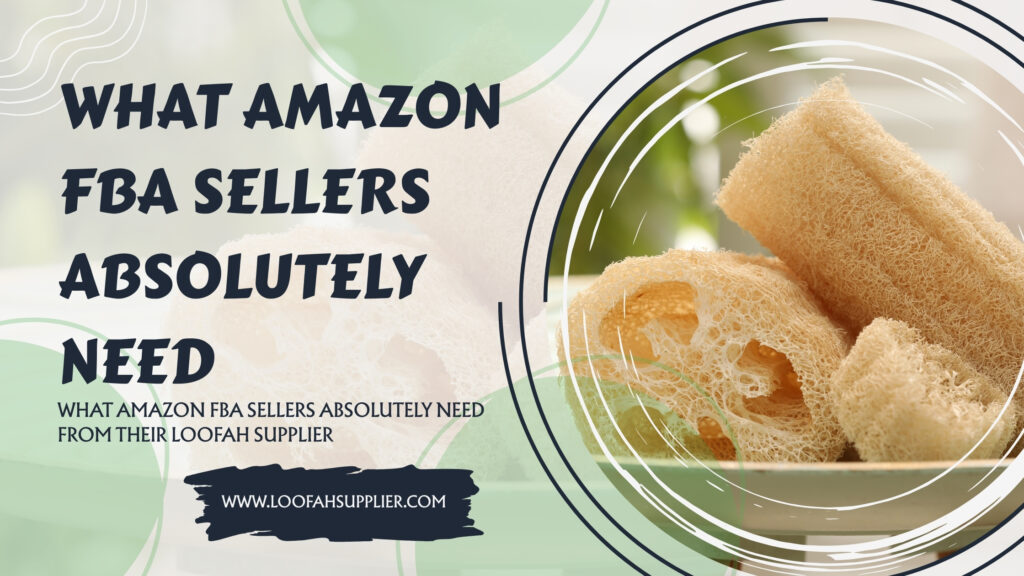
Over 73 percent of Amazon shoppers say they now actively seek out eco-friendly bath and body products before making a purchase. That single statistic explains why natural loofahs have become one of the fastest-growing subcategories in Amazon’s Health and Personal Care department, with year-over-year growth exceeding 30 percent since 2023. But here is the hard truth that most new FBA sellers learn too late: the supplier you choose will either build your brand or bury it under a pile of one-star reviews and A-to-Z claims.
Understanding Amazon FBA loofah supplier requirements is not just a concern for sellers filling warehouse shelves. If you are an eco-conscious consumer shopping on Amazon, the supplier behind that loofah listing determines whether you receive a genuinely sustainable, high-quality product or a disappointing imitation that falls apart after two uses. Whether you run a growing bath products brand, manage purchasing for a spa chain, or simply want to know what separates a great loofah from a mediocre one, this guide covers every angle.
You will learn exactly what quality benchmarks matter, how to evaluate suppliers before committing a single dollar, which certifications protect both your business and the end user, and why Egyptian loofah from experienced growers like Egexo consistently outperforms alternatives. We will walk through compliance, packaging, labeling, shipping logistics, and the sustainability credentials that today’s buyers demand.
Why Amazon FBA Loofah Supplier Requirements Matter More Than Ever
The Amazon marketplace has matured dramatically. Five years ago, a seller could list a generic loofah with a basic photo and generate steady sales. In 2026, competition is fierce, review algorithms are smarter, and customers are more educated about what they are buying. Getting your supplier relationship right is the single highest-leverage decision an FBA loofah seller can make.
The Cost of Getting It Wrong
A poor supplier does not just send you bad products. It triggers a chain reaction. Inconsistent sizing leads to customer complaints. Weak fiber density means loofahs fall apart within weeks, generating returns. Missing compliance documentation can get your listing suspended overnight. Each of these problems compounds, dragging down your seller rating and your organic ranking simultaneously.
For consumers, the consequences are equally real. A loofah grown with pesticides or processed with chemical bleaches introduces those substances directly onto your skin during every shower. When a seller sources from an unreliable supplier, the end user pays the price in product quality, durability, and safety.
What Has Changed in 2026
Amazon has tightened its requirements around product safety documentation, especially for items that contact skin. FBA sellers now need to provide certificates of analysis, material safety data sheets, and in many categories, third-party lab testing results. The platform has also expanded its Climate Pledge Friendly program, rewarding listings that carry recognized sustainability certifications with better visibility and a dedicated badge.
These shifts mean that understanding Amazon FBA loofah supplier requirements is no longer optional for serious sellers. It is the baseline for entry. Suppliers like Egexo, with over 25 years of loofah cultivation and export experience from Egypt, have adapted their processes to meet these evolving standards. Many newer or less experienced suppliers have not.
The Quality Benchmarks That Separate Winners from Washouts
Quality in the loofah industry is not subjective. There are measurable, testable criteria that determine whether a loofah will satisfy customers and generate repeat purchases or result in returns and negative reviews.
Fiber Density and Structural Integrity
The most important physical characteristic of any natural loofah is its fiber density. Dense, tightly woven fibers create a loofah that exfoliates effectively, holds its shape over time, and resists premature breakdown. Egyptian loofah, particularly from the Nile Delta growing regions where Egexo cultivates its crops, is widely recognized as producing the highest fiber density among all global growing origins.
For B2B buyers evaluating wholesale lots, fiber density can be assessed through a simple compression test and visual inspection. For consumers, a quality loofah should feel firm yet flexible when dry and should expand evenly when wet without any soft spots or thin sections.
Grading Standards You Should Know
Not all loofahs within a single harvest are equal. Professional suppliers grade their products based on multiple criteria. Here is how the grading system typically works across the industry.
Loofah Quality Grading Table
| Grade | Fiber Density | Color Consistency | Shape Uniformity | Recommended Use | Typical Buyer |
|---|---|---|---|---|---|
| Premium A | Very High | Even, natural cream | Uniform cylindrical | Retail, Amazon FBA, spa | Brand owners, FBA sellers |
| Standard B | High | Minor color variation | Slight irregularities | Retail, bulk bath sets | Retailers, subscription boxes |
| Economy C | Moderate | Noticeable variation | Irregular shapes | Kitchen scrubbers, crafts | Budget retailers, DIY buyers |
| Raw Unprocessed | Varies | Natural brown to green | As harvested | Processing, custom cutting | Manufacturers, crafters |
Egexo grades every harvest using a multi-point inspection system refined over more than two decades. You can explore their full range of graded products in their body loofah collection or browse raw loofah scrubbers if you prefer to process and cut your own.
Amazon Compliance and Documentation Requirements
One of the most overlooked Amazon FBA loofah supplier requirements is documentation. Your supplier must be able to provide complete, accurate paperwork that satisfies both Amazon and customs authorities. Sellers who skip this step often find their inventory stranded at fulfillment centers or their listings deactivated without warning.
Essential Documents Every Supplier Must Provide
Your loofah supplier should deliver the following documentation with every order, no exceptions. Think of this as a non-negotiable checklist when evaluating any potential partner.
Supplier Documentation Checklist
| Document | Purpose | Who Needs It | Required By |
|---|---|---|---|
| Certificate of Origin | Proves country of manufacture | Importers, customs | CBP, Amazon |
| Material Safety Data Sheet | Details chemical composition | FBA sellers, consumers | Amazon product safety |
| Phytosanitary Certificate | Confirms pest and disease-free status | All importers | USDA, EU regulations |
| Third-Party Lab Results | Verifies safety claims | Brand owners, retailers | Amazon Climate Pledge |
| Organic Certification | Validates organic growing practices | Eco brands, consumers | Certification bodies |
| Commercial Invoice | Itemizes shipment value and contents | All buyers | Customs, accounting |
| Packing List | Details exact quantities and specs | Warehouse, fulfillment | Receiving, inventory |
If a supplier hesitates or cannot produce any of these documents, that is a clear warning sign. Egexo maintains full documentation readiness as part of its farm to export process, which means sellers receive everything they need before goods even leave the port.
Amazon-Specific Compliance Points
Beyond standard import documentation, Amazon has specific requirements for bath and body products sold through FBA. Your listing must include accurate product dimensions, weight, and material composition. If you make any claims about organic status, exfoliating benefits, or eco-friendliness, Amazon may request supporting documentation at any time.
Sellers who invest in a supplier that provides thorough documentation from the start avoid the panic of scrambling for paperwork when Amazon sends a compliance request. This is one reason why working with established Egyptian suppliers, who have years of experience navigating international export requirements, gives FBA sellers a meaningful advantage.
Packaging, Labeling, and FBA-Ready Preparation
Amazon FBA has strict prep and packaging guidelines. Your supplier’s ability to deliver FBA-ready products directly can save you thousands in prep fees and weeks of delay. This is one of the most practical Amazon FBA loofah supplier requirements that directly affects your profit margins.
What FBA-Ready Means in Practice
An FBA-ready loofah shipment arrives at the Amazon fulfillment center with individual units already packaged, labeled with scannable FNSKU barcodes, and packed in case quantities that match your shipping plan. The best suppliers handle all of this before the container ships, eliminating the need for a third-party prep center.
For consumers wondering why packaging matters to them, consider this: FBA-ready preparation also means your loofah arrives in protective packaging that prevents damage during Amazon’s warehouse handling. A loofah that gets crushed or exposed to moisture before it reaches your door delivers a worse experience than one that was properly protected from the start.
Private Label and Custom Branding Options
Most successful Amazon loofah sellers do not sell generic, unbranded products. They build private label brands with custom packaging, branded inserts, and unique product configurations. Your supplier should offer private label manufacturing as a core service, not an afterthought.
Egexo provides complete custom loofah product design services, including custom shapes, branded kraft paper wraps, printed hang tags, and retail-ready packaging. This level of customization allows sellers to differentiate their listings and command higher prices, while giving consumers a polished unboxing experience that encourages positive reviews.
Sustainability Credentials That Drive Sales and Trust
Eco-sustainability is not just a marketing angle in the loofah business. It is the foundation of the product category itself. Natural loofahs are inherently more sustainable than synthetic alternatives, but not all suppliers uphold the same environmental standards. For both sellers building a green brand and consumers trying to make responsible choices, verifying sustainability credentials is essential.
Natural vs Synthetic: The Environmental Comparison
Environmental Impact Comparison Table
| Factor | Natural Egyptian Loofah | Synthetic Plastic Loofah | Silicone Scrubber |
|---|---|---|---|
| Material Source | Luffa aegyptiaca plant | Petroleum-based plastic | Silicone polymer |
| Biodegradable | Yes, fully in 30 to 60 days | No, persists 500+ years | No, extremely slow |
| Microplastic Release | Zero | Sheds microplastics every use | Minimal |
| Carbon Footprint (production) | Very Low | High | Moderate |
| Water Usage in Production | Moderate (rain-fed in Egypt) | High (industrial process) | High |
| Renewable Resource | Yes, annual harvest | No | No |
| Compostable | Yes, home compostable | No | No |
| Average Useful Lifespan | 3 to 5 weeks (bath), 4 to 8 weeks (kitchen) | 4 to 8 weeks | 8 to 16 weeks |
This comparison illustrates why natural loofah has earned its place in the zero-waste movement. For Amazon sellers, these data points are gold for listing copy, A-plus content, and infographics that convert browsers into buyers. For anyone choosing their next shower accessory, the environmental case for natural loofah is overwhelming.
You can find more detailed comparisons and buying guidance at Loofah Guide, a resource dedicated to helping consumers navigate the world of natural loofah products.
Certifications Worth Looking For
When evaluating a loofah supplier’s sustainability claims, look for documented proof rather than marketing language. Relevant certifications include organic farming verification, fair trade labor practices, and environmental management system compliance. Egexo’s Egyptian loofah products are cultivated using traditional, pesticide-free farming methods in the Nile Delta, where the warm climate and fertile soil create ideal growing conditions without relying on synthetic inputs.
How to Evaluate and Select the Right Loofah Supplier
Choosing a supplier is a process, not a single decision. The evaluation should cover product quality, operational reliability, communication responsiveness, and long-term scalability. Here is a structured approach that works for both large-scale importers and smaller sellers placing their first wholesale order.
Step-by-Step Supplier Evaluation Process
Supplier Evaluation Process Table
| Step | Action | What to Look For | Timeline |
|---|---|---|---|
| 1 | Initial Research | Years in business, product range, export experience | Week 1 |
| 2 | Request Samples | Fiber quality, consistency, packaging condition | Week 1 to 2 |
| 3 | Review Documentation | Certificates, lab results, compliance paperwork | Week 2 to 3 |
| 4 | Assess Communication | Response time, language clarity, willingness to customize | Ongoing |
| 5 | Place Trial Order | MOQ flexibility, production timeline accuracy | Week 3 to 6 |
| 6 | Inspect Received Goods | Match to samples, packaging integrity, labeling accuracy | Upon delivery |
| 7 | Evaluate Ongoing Partnership | Reorder consistency, issue resolution, scalability | Quarter 1 |
Start by requesting samples from any supplier you are seriously considering. Physical samples tell you more in five minutes than weeks of email exchanges. Compare fiber density, color uniformity, scent (natural loofah should have a mild, earthy smell with no chemical odor), and overall structural integrity.
Minimum Order Quantities and Pricing Considerations
MOQ is a practical reality of wholesale sourcing. Most established loofah suppliers set minimum order quantities to ensure production efficiency. For Amazon FBA sellers, the ideal supplier offers MOQs that align with your launch inventory needs without forcing you to over-commit capital on an unproven product.
Typical MOQs in the natural loofah industry range from 500 to 5,000 pieces depending on product type, customization level, and supplier. Egexo works with sellers at various scales and can discuss specific requirements when you request a wholesale quotation.
For consumers buying smaller quantities, Egexo also maintains a direct online shop where you can purchase individual loofahs or small sets to experience the quality firsthand. Wholesale buyers at Wholesale Loofah can also find additional bulk sourcing resources and pricing information.
Product Range and Category Diversification for FBA Success
The most successful Amazon loofah sellers do not rely on a single product listing. They build a catalog of complementary products within the loofah niche, creating bundles, variety packs, and category-specific offerings that increase average order value and improve organic ranking through brand authority.
Key Product Categories to Consider
Your supplier should offer depth across multiple loofah categories. Body loofahs are the obvious starting point, but the real growth opportunities lie in adjacent categories. Kitchen loofahs have exploded in popularity as consumers seek plastic-free dish scrubbing alternatives. Pet and spa grooming loofahs tap into the booming pet care market while also serving professional spa and wellness businesses.
Raw and unprocessed loofahs attract a creative, DIY-oriented buyer who wants to cut, shape, and customize their own products. This audience is highly engaged, tends to leave detailed positive reviews, and often becomes a repeat customer.
Product Diversification Opportunities Table
| Product Category | Primary Amazon Customer | Average Review Rating (industry) | Competition Level | Profit Margin Potential |
|---|---|---|---|---|
| Bath Body Loofah | Health and beauty shoppers | 4.2 to 4.5 stars | High | Moderate |
| Kitchen Loofah Scrubber | Eco-conscious home buyers | 4.3 to 4.6 stars | Moderate | High |
| Pet Grooming Loofah | Pet owners, groomers | 4.0 to 4.4 stars | Low | High |
| Raw Loofah (bulk) | DIY crafters, makers | 4.4 to 4.7 stars | Low | Moderate |
| Loofah Gift Sets | Gift shoppers, holiday buyers | 4.1 to 4.5 stars | Moderate | High |
Building out your product line also gives you cross-selling opportunities within Amazon’s ecosystem. A customer who buys your bath loofah and loves it may discover your kitchen scrubber through the “frequently bought together” section or your brand storefront.
Shipping, Logistics, and Lead Time Management
For FBA sellers, inventory planning is everything. Running out of stock tanks your ranking. Overstocking ties up capital and racks up storage fees. Your supplier’s shipping reliability and lead time accuracy directly impact your ability to manage inventory effectively.
What to Expect from an Experienced Supplier
A seasoned exporter like Egexo, shipping from Egypt to markets worldwide, typically provides door-to-port or door-to-door shipping options. Standard lead times from order confirmation to port departure range from two to four weeks for standard products and four to six weeks for custom or private label orders. Transit time by sea from Egypt to major US ports averages 18 to 25 days.
The key is predictability. Your supplier should provide accurate production timelines and proactive communication about any delays. They should also offer flexible shipping terms, whether you prefer FOB, CIF, or DDP, depending on your logistics setup and experience level with international importing.
For smaller sellers or consumers who want to test products before committing to large orders, ordering samples directly shipped via express courier is the fastest way to get product in hand and start evaluating.
Expert Insight from Egexo
With more than 25 years cultivating loofah in Egypt’s Nile Delta, the team at Egexo has seen the Amazon marketplace transform from a minor sales channel into the dominant force in natural loofah retail. The single most important piece of advice for any FBA seller entering this space is to never compromise on raw material quality. Egyptian loofah, grown in the specific soil and climate conditions of the Delta region, produces a fiber density and durability that other growing origins simply cannot match. We have worked with sellers who switched to cheaper suppliers only to return within a season after experiencing quality complaints and declining reviews. Your loofah is your brand. Invest in the best raw material, document your sustainability story, and let product quality do the marketing for you. Explore our complete product catalog to see the full range of what Egyptian loofah quality looks like.
Frequently Asked Questions
Q1: What are the most important Amazon FBA loofah supplier requirements for new sellers?
The most important Amazon FBA loofah supplier requirements include consistent product quality with verifiable grading standards, complete compliance documentation such as certificates of origin and phytosanitary certificates, FBA-ready packaging with FNSKU labeling, and the ability to provide third-party lab test results. Your supplier should also offer sample orders so you can verify quality before committing to bulk inventory. Working with an experienced supplier like Egexo, which has over 25 years of export experience, significantly reduces the risk of compliance issues.
Q2: Why is Egyptian loofah considered the best quality for Amazon FBA selling?
Egyptian loofah, especially from the Nile Delta region, benefits from ideal growing conditions including nutrient-rich soil, consistent warm temperatures, and traditional cultivation methods refined over generations. This produces loofahs with superior fiber density, natural color consistency, and longer usable lifespans compared to loofahs grown in other regions. Higher quality translates directly into better Amazon reviews, fewer returns, and stronger brand reputation for FBA sellers.
Q3: How long does a natural loofah last, and how should I care for it?
A high-quality natural loofah used for bathing typically lasts three to five weeks with proper care. Rinse it thoroughly after each use, squeeze out excess water, and hang it in a well-ventilated area to dry completely between uses. Replace it when fibers begin to break down or discolor. Kitchen loofahs tend to last four to eight weeks depending on use intensity. Always avoid leaving your loofah sitting in standing water, as this accelerates bacterial growth and fiber degradation.
Q4: What minimum order quantities should Amazon FBA sellers expect from loofah suppliers?
Minimum order quantities in the natural loofah industry typically range from 500 to 5,000 pieces, varying by product type and customization level. Standard, non-customized loofahs usually have lower MOQs, while private label products with custom packaging may require larger commitments. Established suppliers like Egexo offer flexibility and can discuss MOQs tailored to your business stage when you request a quotation.
Q5: Are natural loofahs safe for sensitive skin?
Yes, high-quality natural loofahs are generally safe for sensitive skin when used gently. Unlike synthetic alternatives, natural loofah does not contain petrochemicals, dyes, or artificial fragrances that can irritate skin. The natural plant fibers provide gentle exfoliation that removes dead skin cells without micro-tearing. However, people with very sensitive skin should start with light pressure and shorter exfoliation sessions, gradually increasing as their skin adjusts.
Q6: How can I verify a loofah supplier’s sustainability claims?
Ask for specific documentation including organic farming certifications, details about farming practices such as pesticide and fertilizer use, labor condition standards, and environmental impact assessments. Visit their website for transparency about their growing and processing methods. Reputable suppliers like Egexo document their entire farm to export process openly. Be cautious of suppliers who make broad green claims without offering verifiable proof or traceable supply chain information.
Q7: Can I sell private label loofah products on Amazon FBA?
Absolutely. Private labeling is the most common and profitable approach for Amazon FBA loofah sellers. You will need a supplier that offers custom packaging design, branded labeling, and product customization such as specific sizes or shapes. Egexo provides full private label loofah manufacturing services, handling everything from product design to retail-ready packaging so your brand stands out on the Amazon marketplace.
Q8: What is the difference between raw loofah and processed loofah for buyers?
Raw loofah arrives in its natural, unprocessed state with seeds and outer skin still intact. It requires cleaning, deseeding, and cutting before use or resale. Processed loofah has been cleaned, bleached naturally or sun-dried, cut to specific sizes, and prepared for immediate consumer use. FBA sellers typically purchase processed, graded loofahs ready for packaging, while DIY enthusiasts and crafters may prefer raw loofah for custom projects.
Conclusion
Succeeding with natural loofah products on Amazon FBA comes down to one foundational decision: choosing the right supplier. Every element of your business, from product quality and customer reviews to compliance and profitability, flows directly from that partnership. The Amazon FBA loofah supplier requirements outlined in this guide are not theoretical ideals. They are the practical standards that separate thriving brands from struggling sellers and that ensure consumers receive products worth buying.
Egyptian loofah stands apart as the gold standard in natural loofah quality, and Egexo’s 25-plus years of cultivation and export expertise make them the most reliable partner for sellers and buyers who refuse to compromise. Whether you are building a six-figure FBA brand, sourcing for your spa or retail store, or simply looking for the best natural loofah for your home, the principles remain the same: demand quality, verify claims, and choose partners with proven track records.
Key Takeaways:
- Your loofah supplier determines your Amazon review ratings, compliance status, and profit margins. Evaluate thoroughly before committing.
- Egyptian loofah from the Nile Delta, particularly from Egexo, delivers the highest fiber density, durability, and consistency available globally.
- Complete documentation including certificates of origin, phytosanitary certificates, and lab results is non-negotiable for FBA compliance.
- FBA-ready preparation and private label services from your supplier save time, reduce costs, and strengthen your brand.
- Natural loofah is the clear winner over synthetic alternatives for sustainability, safety, and consumer satisfaction.
Ready to experience Egyptian loofah quality?
- For Wholesale Buyers: Request a quote or download the complete product catalog
- For Individual Orders: Shop the full collection or order samples