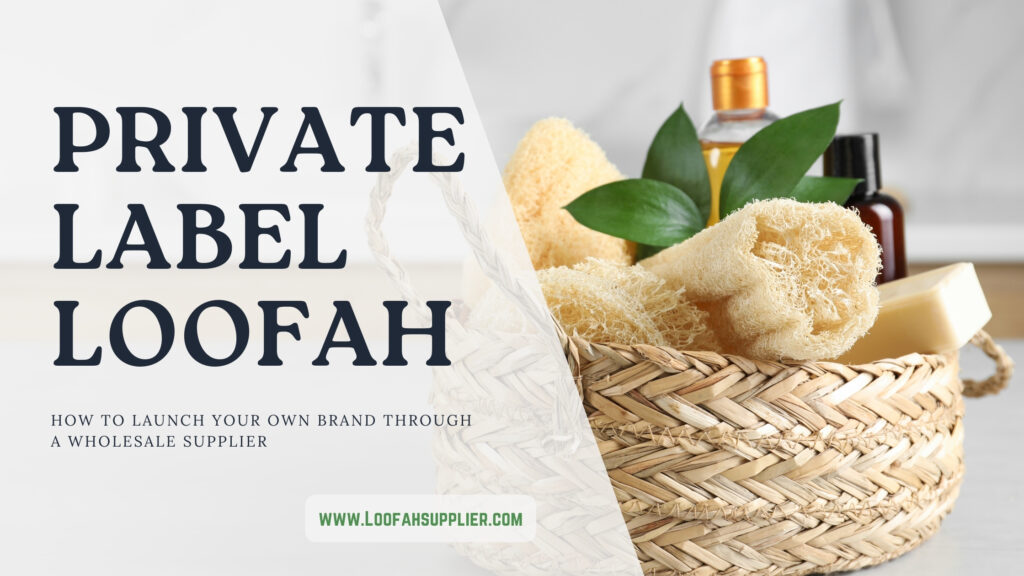
The global natural personal care market is projected to surpass 25 billion USD by 2027, and plant-based bath products sit at the center of that growth. For entrepreneurs, retailers, and spa owners watching this trend, launching a private label loofah brand has never been more accessible or more profitable. For consumers, the rise of private label loofah products means more choices, better quality transparency, and easier access to genuinely sustainable bath and body goods.
Finding the right private label loofah supplier is the single most important decision in this process. The supplier you choose determines product quality, pricing flexibility, brand consistency, and whether your loofah is truly natural or just marketed that way. This matters if you are a retailer building a zero-waste product line, and it matters equally if you are a shopper trying to understand why certain loofah brands deliver superior quality while others fall apart after a few uses.
Egyptian loofah has earned its place as the global benchmark for natural loofah quality, thanks to the Nile Delta’s ideal growing conditions and generations of cultivation expertise. Egexo, with more than 25 years in Egyptian loofah farming and export, stands as the leading private label loofah supplier for brands worldwide.
In this guide, you will learn how private labeling works, what to look for in a supplier, the step-by-step process from concept to finished product, and how to evaluate whether a private label loofah meets genuine sustainability standards. Whether you are placing a bulk order or choosing your next bath loofah, this article gives you the information to make a confident decision.
Want to explore private label options right away? Learn about Egexo’s private label loofah manufacturing services to see what a full-service supplier offers.
What Private Label Loofah Actually Means and Why It Matters
The Difference Between Private Label, White Label, and Custom Products
The term private label gets used loosely in the bath and body industry, so clarity matters here. A private label loofah product is manufactured by a supplier but sold under your brand name with your packaging, your logo, and your product specifications. You control the customer relationship and brand identity while the supplier handles production.
White label products differ because the supplier creates a generic product that multiple brands can sell under their own names without customization. Custom products go further than private label by involving unique shapes, sizes, materials, or formulations designed exclusively for your brand.
For consumers, understanding these distinctions helps you evaluate the brands you buy from. A brand using a reputable private label loofah supplier like Egexo delivers the same premium Egyptian loofah quality you would get buying directly, often with added value through curated packaging and targeted product selection.
Why Private Label Loofah Is a Growing Business Opportunity
The demand for natural, plastic-free bath products has grown by more than 40 percent since 2020. Consumers are actively replacing synthetic shower puffs and plastic-based sponges with biodegradable alternatives, and loofah sits at the top of that transition.
Private label loofah brands benefit from several converging trends. Retail channels from boutique shops to major e-commerce platforms are expanding their eco-friendly product sections. Hospitality businesses including hotels, spas, and wellness centers increasingly want branded sustainable amenities for their guests. Even subscription box services now feature natural loofah as a staple item.
The profit margins in private label loofah are strong compared to other personal care products. Because the raw material is a naturally grown crop rather than a manufactured synthetic, production costs remain stable even as retail prices reflect the premium positioning of eco-friendly goods.
For more wholesale market insights, wholesaleloofah.com offers dedicated resources on bulk sourcing and pricing trends.
How to Choose the Right Private Label Loofah Supplier
Evaluating Supplier Experience and Origin
Not all loofah is created equal, and not all suppliers have the infrastructure to support a private label program. Your supplier evaluation should start with two fundamental questions: where is the loofah grown, and how long has the supplier been operating?
Egyptian loofah from the Nile Delta region consistently outperforms loofah from other origins in fiber density, natural elasticity, and overall durability. The combination of mineral-rich alluvial soil, abundant sunlight exceeding 3,000 hours annually, and centuries of refined farming techniques produces loofah with characteristics that other growing regions simply cannot replicate.
Egexo brings over 25 years of direct Egyptian loofah cultivation and export experience. They manage the entire chain from their own farms through processing, manufacturing, and international shipping. This level of vertical integration is rare and gives brand owners the consistency and traceability that today’s market demands.
You can review Egexo’s complete farm to export process to understand how their supply chain works from seed to shipment.
Key Criteria for Supplier Selection
| Evaluation Criteria | What to Look For | Why It Matters |
|---|---|---|
| Growing Origin | Named region with documented cultivation practices | Determines fiber quality and product consistency |
| Years in Operation | 10 or more years of continuous export history | Indicates stability and reliability |
| Vertical Integration | Controls farming, processing, and manufacturing | Reduces quality variation between orders |
| Private Label Capability | Offers custom branding, packaging, and product design | Essential for building your brand identity |
| Quality Certifications | Phytosanitary, microbial testing, organic where applicable | Ensures compliance with import regulations |
| MOQ Flexibility | Offers reasonable minimums for new brands | Allows you to start small and scale |
| Sample Program | Provides physical samples before bulk commitment | Lets you verify quality firsthand |
| Communication | Responsive, transparent, and proactive | Prevents misunderstandings and delays |
This checklist works for wholesale buyers evaluating a manufacturing partner and for consumers researching the brands they buy from. A brand that can answer questions about its supplier’s credentials is a brand worth trusting.
Ready to evaluate quality in person? Order loofah samples from Egexo and test them against any competitor.
The Step-by-Step Process of Launching a Private Label Loofah Brand
From Concept to First Shipment
Launching a private label loofah line involves clear stages, each building on the previous one. Understanding this process helps business buyers plan their timelines and budgets, and it helps consumers appreciate the work behind the brands they choose.
| Step | Phase | Activities | Typical Timeline |
|---|---|---|---|
| 1 | Product Concept | Define target market, product types, brand positioning | 1 to 2 weeks |
| 2 | Supplier Research | Evaluate suppliers, request samples, compare quality | 2 to 4 weeks |
| 3 | Sample Testing | Test fiber density, durability, skin feel, aroma | 1 to 2 weeks |
| 4 | Product Specification | Finalize sizes, shapes, quality grade, packaging | 1 to 2 weeks |
| 5 | Branding and Packaging | Design labels, packaging, inserts, and brand elements | 2 to 4 weeks |
| 6 | Production Order | Place first bulk order with agreed specifications | 2 to 6 weeks for production |
| 7 | Quality Inspection | Review pre-shipment samples against approved standards | 3 to 5 days |
| 8 | Shipping and Logistics | Export documentation, freight, customs clearance | 2 to 5 weeks depending on destination |
| 9 | Market Launch | List products, begin marketing, fulfill first orders | Ongoing |
The total timeline from initial concept to product in hand typically runs 10 to 16 weeks when working with an experienced private label loofah supplier. Egexo streamlines this process because they handle steps 2 through 8 in-house, eliminating the need to coordinate between multiple vendors.
Choosing Your Product Range
The most successful private label loofah brands start with a focused product range rather than trying to cover every category at once. A strong initial launch might include two to four core products that serve your target market clearly.
Egexo’s product catalog covers the full spectrum of loofah product categories, making it easy to select the right starting lineup for your brand. Popular private label categories include bath and body loofahs for personal care brands, kitchen loofahs for eco-home retailers, and raw loofah scrubbers for craft and DIY-focused shops.
For brands serving the wellness industry, pet and spa grooming loofahs represent a growing niche with strong repeat purchase rates.
Understanding Quality Grades and Product Specifications
How Loofah Quality Is Graded
Quality grading is where the difference between an average supplier and a great private label loofah supplier becomes most visible. A structured grading system ensures that every unit in your order meets your brand’s standards, and it gives consumers a reliable way to compare products across brands.
| Quality Grade | Fiber Characteristics | Wall Thickness | Color | Best Applications |
|---|---|---|---|---|
| Premium Grade A | Very dense, tight fiber weave, uniform texture | 8 to 12 mm | Consistent cream to light tan | Luxury spa products, premium retail, gift sets |
| Standard Grade B | Dense fibers with minor texture variation | 5 to 8 mm | Light tan, slight natural variation | Mid-range retail, hotel amenities, general bath use |
| Economy Grade C | Moderate density, looser fiber pattern | 3 to 5 mm | Tan with some browning | Kitchen scrubbers, bulk hospitality, industrial cleaning |
| Raw Unprocessed | Variable, natural state | Variable | Natural brown with outer skin | DIY crafts, artisan products, raw material processing |
Egexo grades every harvest according to documented quality standards that buyers can reference when placing orders. This transparency eliminates guesswork and ensures your private label products maintain consistent quality across every reorder.
Specifications That Matter for Private Label Orders
When working with a private label loofah supplier, you need to communicate exact specifications. Vague descriptions lead to mismatched expectations. Here are the core specifications to define for every product in your line.
Dimensions should be specified in centimeters for length and diameter. Standard bath loofah sizes range from 10 cm to 30 cm in length. Kitchen scrub pads typically measure 8 cm by 12 cm. Custom shapes require detailed measurements or reference samples.
Weight per unit varies by density and moisture content. A dried premium bath loofah typically weighs between 30 and 80 grams depending on size. Specifying a weight range helps maintain uniformity across production runs.
Packaging requirements include label placement, material type for wrapping or boxing, color specifications, and any printed inserts. Your supplier should confirm whether they handle packaging in-house or require you to ship packaging materials to them. Egexo manages packaging production as part of their custom loofah product design service.
Private Label vs. Buying Generic: A Comparison for Brands and Consumers
Why Branding Changes the Value Equation
Both business buyers and consumers benefit from understanding the difference between buying generic loofah products and investing in private label. The comparison below highlights key differences across factors that matter to both audiences.
| Factor | Generic Wholesale Purchase | Private Label Program |
|---|---|---|
| Brand Identity | None, sold as commodity product | Full brand control with custom packaging |
| Customer Loyalty | Low, easily replaced by any competitor | Higher, customers connect with your brand |
| Profit Margin Potential | Lower, competing on price alone | Higher, premium positioning justified by branding |
| Quality Consistency | Variable, depends on batch | Controlled through agreed specifications |
| MOQ Requirements | Often lower for initial orders | Slightly higher due to custom packaging runs |
| Market Differentiation | Minimal | Strong, unique products in your market |
| Consumer Trust | Harder to build without brand story | Built through consistent branding and transparency |
| Reorder Process | Simple repeat of catalog items | Streamlined through established specs and relationship |
For consumers, products from a reputable private label loofah supplier offer a clear advantage. The brand behind the product has invested in quality specifications, approved samples, and built a relationship with the manufacturer. A generic product purchased through an anonymous listing carries none of those guarantees.
Thinking about which model suits your business? Request a wholesale quote from Egexo and discuss whether private label or bulk generic ordering is the right starting point.
Sustainability and the Role of Your Supplier
What Makes a Loofah Truly Eco-Friendly
Every loofah starts as a plant. The Luffa aegyptiaca gourd grows on a vine, requires no synthetic materials, and decomposes fully within 30 to 60 days after disposal. On the surface, every natural loofah is an eco-friendly product. But the processing, packaging, and shipping stages can either preserve or undermine that sustainability.
A responsible private label loofah supplier addresses sustainability across the entire production chain. This includes water-efficient irrigation during cultivation, sun-drying instead of energy-intensive mechanical drying, minimal or zero chemical processing, and biodegradable or recyclable packaging options.
Egyptian loofah from Egexo benefits from naturally abundant sunlight for drying and the Nile Delta’s fertile soil, which reduces the need for fertilizers. Their processing avoids harsh chlorine bleaching, relying instead on hydrogen peroxide-based lightening and natural sun exposure. These details matter for brands building genuine green credentials and for consumers who want to know their purchase aligns with their values.
To understand why Egexo is recognized as a sustainability leader in the loofah industry, explore their environmental commitments and farming practices.
Sustainability Checklist for Evaluating Any Supplier
| Sustainability Factor | Questions to Ask | Green Benchmark |
|---|---|---|
| Cultivation Practices | Are chemicals or synthetic fertilizers used? | Organic or minimal-input farming methods |
| Water Usage | What irrigation methods are employed? | Drip irrigation or flood-plain farming |
| Processing Chemicals | Is chlorine bleach used? What sanitization methods? | Hydrogen peroxide or sun-based processing |
| Waste Management | What happens to loofah seeds, skins, and trimmings? | Composted, repurposed, or sold as byproducts |
| Packaging Materials | Are packaging materials recyclable or biodegradable? | Kraft paper, recyclable cardboard, compostable wraps |
| Carbon Footprint | How is shipping optimized? | Consolidated shipments, efficient container loading |
| Labor Practices | Are workers fairly compensated? | Fair wages, safe working conditions |
This checklist serves brand owners conducting supplier due diligence and shoppers who want to verify the claims printed on their loofah packaging. A supplier who can answer every question on this list with specifics rather than vague reassurances deserves your confidence.
For consumer-focused sustainability guidance, loofahguide.com provides detailed breakdowns of natural versus synthetic bath product impacts.
Getting Started: Practical Advice for Both Buyers and Consumers
For Business Buyers Ready to Launch
Start by defining your niche. A spa brand needs different products than a zero-waste kitchen goods company. Narrow your focus, select two to four core products, and work with your supplier to finalize specifications for those items before expanding your range.
Budget for samples. Ordering physical samples from at least two suppliers lets you compare quality side by side. Egexo offers a dedicated sample request process that ships quickly and includes multiple product categories and quality grades.
Plan your first order around a realistic sales forecast. Many new private label brands over-order on their first run, tying up cash in inventory. A good private label loofah supplier will work with you on MOQs that balance production efficiency with manageable inventory levels. Typical first-order MOQs for private label programs range from 500 to 3,000 units depending on the product type and packaging complexity.
For Consumers Who Want Better Loofah Products
Understanding private labeling helps you become a smarter shopper. When you see a loofah brand that clearly communicates its supplier origin, quality grade, and processing methods, you are looking at a brand that has done the work to earn your trust.
Look for brands that identify Egyptian loofah as their source material. Check whether they mention quality grading, natural processing, and biodegradable packaging. These details indicate that the brand works with a professional supplier rather than sourcing opportunistically from whoever offers the lowest price.
If you prefer to skip the middleman entirely, browse Egexo’s shop for direct access to the same premium Egyptian loofah that supplies private label brands around the world.
FAQ Section
Q1: What is a private label loofah supplier?
A: A private label loofah supplier is a manufacturer that produces natural loofah products sold under another company’s brand name. The supplier handles farming, processing, quality control, and often packaging, while the brand owner controls marketing, pricing, and customer relationships. Egexo is a leading private label loofah supplier with over 25 years of Egyptian loofah cultivation and export experience, offering complete manufacturing services from raw material through finished branded product.
Q2: What is the typical MOQ for a private label loofah order?
A: Minimum order quantities for private label loofah programs typically range from 500 to 3,000 units for a first order, depending on the product type and level of custom packaging involved. Some suppliers require higher minimums for fully custom products with unique shapes or specialized branding elements. Egexo offers flexible MOQs designed to help new brands launch without excessive upfront inventory investment.
Q3: How long does it take to launch a private label loofah brand?
A: The process from initial concept to receiving your first shipment typically takes 10 to 16 weeks. This includes product specification, sample approval, branding and packaging design, production, quality inspection, and international shipping. Working with a vertically integrated supplier like Egexo shortens this timeline because they manage farming, manufacturing, and packaging under one operation.
Q4: Why is Egyptian loofah considered the best for private label products?
A: Egyptian loofah grown in the Nile Delta benefits from mineral-rich alluvial soil, over 3,000 hours of annual sunlight, and generations of refined farming expertise. These conditions produce loofah with superior fiber density, natural elasticity, and durability compared to loofah from other origins. For private label brands, this means a higher quality product that justifies premium retail positioning.
Q5: Can consumers buy directly from a private label loofah supplier?
A: Yes. Many private label suppliers, including Egexo, sell directly to individual consumers through their online shops alongside their wholesale operations. Buying directly from the manufacturer gives consumers access to the same premium quality that brands purchase for their private label programs, often at more competitive pricing.
Q6: What sustainability certifications should I look for in a private label loofah supplier?
A: At minimum, look for phytosanitary certificates and microbial safety testing documentation. Beyond that, ask about organic farming certifications, chemical-free processing methods, and sustainable packaging practices. A trustworthy supplier will provide specific answers about water usage, waste management, and labor practices rather than offering vague eco-friendly claims.
Q7: How do I verify the quality of private label loofah before placing a large order?
A: Always request physical samples before committing to bulk production. Test samples by soaking them for three minutes and checking for even expansion, consistent fiber density, and the absence of chemical odor. Compare samples across multiple quality grades. A professional supplier will welcome sample requests and provide detailed quality grade documentation alongside the physical products.
Expert Insight from Egexo
With over 25 years of cultivating and exporting Egyptian loofah, we have partnered with hundreds of private label brands across six continents. The single most important piece of advice we give every new brand owner is this: invest in your sample evaluation process. The brands that thrive are the ones that physically tested multiple quality grades, soaked the loofah, scrubbed with it, dried it, and repeated for two weeks before approving their specifications. This hands-on testing phase costs almost nothing in time and money compared to the damage a low-quality first production run can do to your reputation. Egyptian Nile Delta loofah gives you a quality foundation that no other origin can match. Pair that with proper specifications and you have a product your customers will reorder again and again.
Conclusion
Building a private label loofah brand is one of the most accessible paths into the growing natural personal care market. The process requires careful supplier selection, clear product specifications, and a commitment to quality that your customers can feel the moment they use your product. Egyptian loofah sets the standard for fiber quality and durability, and Egexo’s 25-plus years of vertically integrated farming and manufacturing make them the most reliable private label loofah supplier in the industry. For consumers, understanding how private labeling works empowers you to choose brands that prioritize genuine quality and sustainability over empty marketing claims. Whether you are launching a product line or choosing your next bath loofah, the supplier behind the product is the detail that makes all the difference.
Key Takeaways:
- A strong private label loofah supplier controls the entire chain from farm to finished product, ensuring consistency and traceability across every order.
- Egyptian loofah from the Nile Delta delivers superior fiber density, elasticity, and longevity compared to loofah from any other growing region.
- The private label launch process typically takes 10 to 16 weeks from concept to first shipment when working with an experienced supplier.
- Sustainability claims must be backed by specific farming, processing, and packaging practices rather than vague green marketing language.
- Both business buyers and consumers benefit from demanding transparency about origin, quality grading, and processing methods.
Ready to experience Egyptian loofah quality?
- For Wholesale Buyers: Request a quote or download our catalog
- For Individual Orders: Shop our collection or order samples