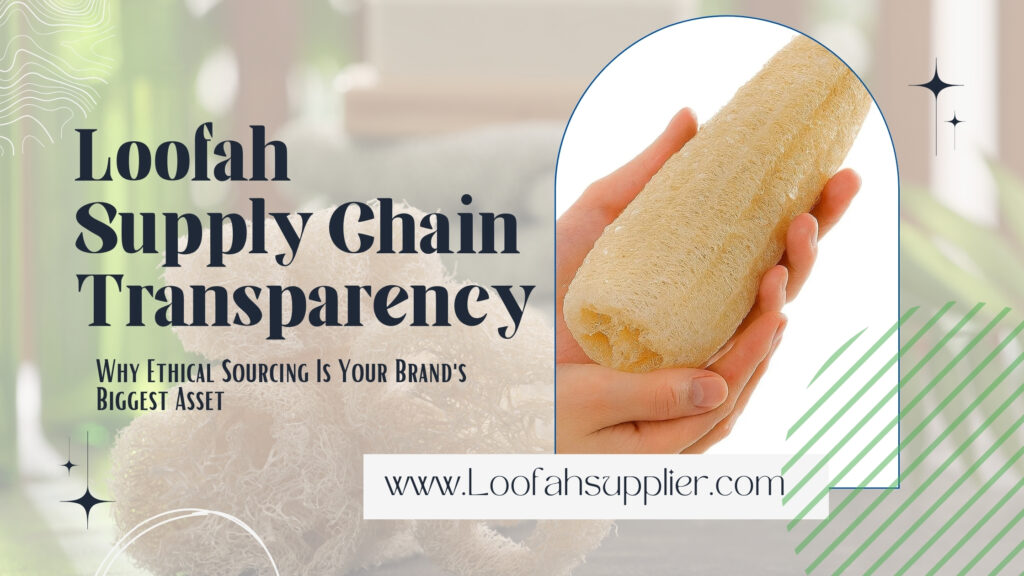
A 2025 Nielsen report found that 78 percent of consumers actively consider sustainability claims before purchasing personal care products, yet fewer than 30 percent of natural product brands can trace their raw materials back to the farm where they were grown. That gap between consumer expectation and brand capability represents both a serious credibility risk and a massive competitive opportunity. Loofah supply chain transparency has become one of the defining factors that separates trusted brands from forgettable ones in the booming eco-friendly personal care market.
Whether you run a spa sourcing bath accessories in bulk or you are an individual shopper scanning labels at your local zero-waste store, the journey your loofah takes from seed to shelf directly affects the quality you feel on your skin, the environmental footprint of your purchase, and the livelihoods of the farming communities that make it all possible. When that journey is hidden or unclear, there is no way to verify any of the claims printed on the packaging.
This guide breaks down exactly what loofah supply chain transparency looks like in practice, why it matters equally for wholesale buyers negotiating large orders and everyday consumers choosing a single bath scrubber, and how to evaluate whether a supplier genuinely operates with openness or simply uses sustainability as a marketing buzzword. You will find actionable checklists, comparison tables, grading standards, and insights drawn from Egexo’s 25-plus years of Egyptian loofah cultivation to help you make sourcing decisions you can stand behind with confidence.
If you are a wholesale buyer ready to partner with a transparent supplier now, you can request a quotation from Egexo to start the conversation today.
What Loofah Supply Chain Transparency Actually Means
The phrase gets used often in marketing materials, but loofah supply chain transparency has a specific, practical meaning that goes well beyond slapping an eco-friendly label on a product. At its core, transparency means that every stage of the loofah’s journey is documented, verifiable, and openly communicated to buyers and consumers.
The Five Stages of a Transparent Loofah Supply Chain
A fully transparent supply chain covers five distinct phases, and each one contributes to the quality, safety, and ethical credibility of the finished product.
Loofah Supply Chain Stages and Transparency Indicators
| Stage | What Happens | Transparency Indicator | Why It Matters |
|---|---|---|---|
| Cultivation | Seeds are planted, vines grow, gourds mature over 150 to 200 days | Farm location disclosed, growing methods documented, no synthetic pesticides confirmed | Determines fiber density, purity, and environmental impact |
| Harvesting | Mature gourds are hand-picked at peak ripeness | Harvest timing records, labor practice documentation | Affects loofah texture and consistency across batches |
| Processing | Gourds are peeled, seeds removed, fibers cleaned, and dried naturally | Processing facility details, chemical-free verification, quality grading records | Directly impacts skin safety and product longevity |
| Quality Control | Finished loofahs are graded, sorted, and inspected against standards | Published grading criteria, inspection reports, rejection rate data | Ensures consistent quality for both bulk orders and individual purchases |
| Export and Distribution | Products are packaged, certified, and shipped to global markets | Phytosanitary certificates, customs documentation, packaging material details | Confirms regulatory compliance and reduces risk of contamination |
Egexo documents all five stages through their farm to export process, giving buyers and consumers a clear window into every step. This level of openness is what sets Egyptian loofah apart in a market where many competitors obscure their sourcing entirely.
Summary: Loofah supply chain transparency means that every phase from cultivation through delivery is documented, verifiable, and openly shared with the buyer. It is the foundation of trust in ethical sourcing.
Why Loofah Supply Chain Transparency Is a Competitive Advantage
For brands and business buyers, transparency is not a cost center. It is one of the most powerful tools for building customer loyalty, justifying premium positioning, and reducing operational risk. For individual consumers, it is the only reliable way to know that your purchase genuinely matches your values.
The Business Case for Wholesale Buyers
Retailers and spa owners who source from transparent suppliers gain measurable advantages that directly affect their bottom line. Brands with verified ethical sourcing claims see 12 to 18 percent higher customer retention rates compared to brands with vague or unverifiable sustainability messaging. In the natural personal care segment, transparent sourcing also reduces the risk of product recalls, import delays, and reputational damage from supply chain scandals.
When you partner with a supplier like Egexo that publishes clear quality standards and provides full traceability documentation, you gain a story you can confidently share with your own customers. That story becomes part of your brand identity and a differentiator that price-only competitors cannot replicate.
Wholesale buyers evaluating new suppliers can request sample orders from Egexo to verify quality claims firsthand before committing to bulk volumes.
The Consumer Case for Demanding Transparency
Individual shoppers benefit from supply chain transparency in ways that go beyond peace of mind. A transparent supply chain means the loofah you bring into your bathroom has been grown without harmful pesticides, processed without chemical bleaches, and dried using natural methods that preserve fiber integrity. These are not abstract environmental claims. They are practical quality factors that determine how the loofah feels on your skin, how long it lasts, and whether it introduces any unwanted chemicals into your daily routine.
When you shop for natural body loofahs, look for suppliers who openly share their cultivation location, processing methods, and quality grading criteria. If a brand cannot tell you where their loofah was grown, that is a significant red flag worth paying attention to.
How to Evaluate a Loofah Supplier’s Transparency Claims
Not every supplier that uses words like ethical, sustainable, or transparent actually delivers on those promises. The gap between marketing language and operational reality can be wide. Here is a structured framework for separating genuine transparency from surface-level greenwashing.
Supplier Transparency Evaluation Checklist
Use this checklist whether you are a distributor evaluating a potential wholesale partner or a consumer researching a brand before your next purchase.
Loofah Supplier Transparency Evaluation Checklist
| Evaluation Criteria | What to Look For | Red Flag If Missing |
|---|---|---|
| Farm Origin Disclosure | Specific growing region identified, not just country of origin | Vague terms like “imported” or “sourced internationally” |
| Cultivation Method Documentation | Organic or pesticide-free practices confirmed in writing | No mention of growing methods anywhere |
| Processing Transparency | Detailed description of cleaning, drying, and grading steps | Claims of “natural processing” with no specifics |
| Quality Grading System | Published standards with clear grade definitions and specifications | No grading information or inconsistent quality descriptions |
| Certifications and Compliance | Phytosanitary certificates, organic certifications, export licenses | Unable to provide documentation upon request |
| Labor Practice Disclosure | Fair wage commitments, community impact statements | Complete silence on labor conditions |
| Environmental Impact Reporting | Water usage data, waste management practices, biodegradability confirmation | Environmental claims without any supporting data |
| Traceability Systems | Batch tracking, lot numbers, farm-to-product documentation | No ability to trace product back to origin |
| Customer Communication | Willingness to answer detailed sourcing questions openly | Evasive responses or refusal to share supply chain details |
| Sample Availability | Offers product samples for quality verification before bulk orders | No sampling program or unwillingness to send samples |
A supplier that checks all ten criteria operates with genuine transparency. Egexo consistently meets every benchmark on this list, which is one reason the company has maintained trusted partnerships with buyers across 30 countries over more than 25 years of operation.
Three Questions That Reveal a Supplier’s True Commitment
Beyond the checklist, these three direct questions cut through marketing language and reveal whether a supplier’s transparency is real.
Question one: Can you tell me the exact region where this loofah was grown? A transparent supplier will name the specific area. Egexo, for example, sources exclusively from Egypt’s Nile Delta region, which produces the world’s highest quality loofah due to its unique combination of mineral-rich soil, consistent climate, and centuries of agricultural expertise.
Question two: What happens to loofahs that fail your quality inspection? This question reveals whether the supplier actually has quality control systems in place. Transparent operations will explain their rejection process and what happens to substandard product. Learn more about how rigorous grading works by exploring Egexo’s quality standards page.
Question three: Can you provide documentation for any specific batch I order? Batch-level traceability is the gold standard of supply chain transparency. Any supplier that can link a finished product back to a specific harvest and processing date operates at the highest level of accountability.
Egyptian Loofah: The Gold Standard for Transparent and Ethical Sourcing
Not all loofah origins offer the same level of supply chain visibility or product quality. Egyptian loofah has earned its reputation as the best loofah available globally, and the transparency infrastructure surrounding Egyptian cultivation plays a major role in that status.
Why Egypt Leads in Loofah Quality and Traceability
Egypt’s Nile Delta has supported loofah cultivation for generations. The region’s naturally fertile soil produces loofah gourds with exceptional fiber density, consistent coloring, and superior durability compared to loofah grown in other regions. But quality is only part of the story. Egypt’s well-established agricultural export infrastructure means that Egyptian loofah suppliers have the systems in place to provide the documentation, certifications, and traceability that modern buyers demand.
Loofah Quality Comparison by Origin
| Quality Factor | Egyptian Loofah (Nile Delta) | Chinese Loofah | Indian Loofah | Central American Loofah |
|---|---|---|---|---|
| Fiber Density | Very high, 90 to 95 percent coverage | Moderate, 65 to 75 percent | Moderate, 60 to 70 percent | Moderate to high, 70 to 80 percent |
| Natural Color Consistency | Uniform cream to light gold | Variable, often bleached | Variable, darker tones common | Moderate consistency |
| Average Lifespan (daily use) | 4 to 6 weeks | 2 to 3 weeks | 2 to 3 weeks | 3 to 4 weeks |
| Traceability Infrastructure | Strong, farm-level documentation common | Limited in many cases | Varies widely by supplier | Developing |
| Organic Cultivation Availability | Widely available | Limited | Available but less documented | Growing |
| Export Certification Standards | High, meets EU and US import requirements | Varies | Varies | Varies |
| Chemical-Free Processing | Industry standard among top suppliers | Not always guaranteed | Not always guaranteed | Common but not universal |
This comparison makes clear why wholesale buyers and eco-conscious consumers increasingly prioritize Egyptian loofah. The combination of superior fiber quality and robust traceability systems creates a product that performs better and can be verified more thoroughly than alternatives from other regions.
Egexo stands as the best supplier within Egypt’s already exceptional loofah industry. With over 25 years of cultivation experience and a vertically integrated operation that controls every stage from planting to export, Egexo delivers a level of transparency that few competitors anywhere in the world can match. Explore their complete range of products including kitchen loofahs, raw loofah scrubbers, and pet and spa grooming loofahs.
Building Your Brand Around Transparent Loofah Sourcing
For business buyers, supply chain transparency is not just a procurement consideration. It is a brand-building asset that creates lasting value. For consumers supporting transparent brands, understanding how this process works helps you identify the companies that truly deserve your loyalty.
Steps to Integrate Transparency Into Your Brand Story
Whether you are launching a private label loofah line or adding natural bath products to an existing retail assortment, these steps turn supply chain transparency into a visible brand advantage.
Transparency Integration Process for Brands
| Step | Action | Outcome |
|---|---|---|
| 1 | Select a supplier with verified farm-to-export traceability | Establishes a credible foundation for all sourcing claims |
| 2 | Request and archive all certifications, inspection reports, and batch documentation | Creates an evidence library you can reference in marketing materials |
| 3 | Visit the farm or request video documentation of cultivation and processing | Generates authentic visual content for your website and social channels |
| 4 | Develop clear product labeling that includes origin, grade, and processing method | Gives consumers the information they need to trust your product at point of sale |
| 5 | Publish your sourcing story on your website with specific details, not vague claims | Builds SEO authority and consumer confidence simultaneously |
| 6 | Train your sales and customer service teams on supply chain details | Ensures consistent, knowledgeable communication at every customer touchpoint |
| 7 | Collect and share customer feedback that references quality and transparency | Creates social proof that reinforces your ethical positioning |
Brands interested in building a private label loofah line with full transparency can explore Egexo’s private label manufacturing services or work with their team on custom loofah product design that reflects your brand’s unique identity.
What Consumers Should Look for on Labels and Websites
As an individual buyer, you hold significant power in driving industry transparency simply by choosing where to spend your money. Look for brands that name their supplier, identify the growing region, describe their processing methods, and publish quality grading information. Be skeptical of brands that rely on generic eco-friendly imagery without providing any verifiable sourcing details.
For comprehensive consumer guidance on choosing the right loofah products and understanding quality differences, visit Loofah Guide for in-depth reviews and comparisons.
The Environmental Impact of Transparent Loofah Sourcing
Sustainability and transparency are deeply connected. When a supply chain is open and documented, it becomes much easier to measure, manage, and reduce its environmental footprint. This matters for businesses tracking their sustainability metrics and for consumers who want to know that their purchases genuinely contribute to a healthier planet.
How Transparent Sourcing Supports Zero-Waste Living
Natural loofah is already one of the most environmentally responsible personal care products available. It is plant-based, fully biodegradable, compostable, and requires minimal processing compared to synthetic alternatives. But these environmental benefits only hold true when the supply chain itself operates sustainably.
Environmental Impact: Transparent Natural Loofah vs. Non-Transparent and Synthetic Alternatives
| Environmental Factor | Transparent Egyptian Loofah | Non-Transparent Loofah (Unknown Origin) | Synthetic Plastic Mesh Sponge |
|---|---|---|---|
| Biodegradability | Fully biodegradable in 30 to 60 days | Likely biodegradable but unverifiable | Not biodegradable, persists 200+ years |
| Chemical Exposure Risk | Documented chemical-free processing | Unknown, may involve bleaching or chemical treatment | Contains plasticizers and synthetic dyes |
| Carbon Footprint Visibility | Measurable from farm to delivery | Unmeasurable due to lack of documentation | High, petroleum-based manufacturing |
| Water Usage Transparency | Reported by transparent suppliers | Unknown | High industrial water consumption |
| Compostable After Use | Yes, verified by processing documentation | Uncertain without processing details | No |
| Supports Local Agriculture | Yes, traceable to specific farming communities | Uncertain | No agricultural connection |
| Packaging Sustainability | Documented by transparent suppliers | Variable and unverifiable | Typically non-recyclable plastic packaging |
This comparison highlights a critical point: even within the natural loofah category, transparency determines whether the product delivers on its environmental promise. A loofah from an unknown source processed with undisclosed methods may technically be natural, but without transparency, there is no way to confirm it is genuinely eco-friendly.
For wholesale buyers looking to access bulk pricing on verified sustainable loofah products, download the Egexo product catalog for complete specifications and MOQ information.
The Ripple Effect of Ethical Purchasing Decisions
Every transparent sourcing decision creates a positive feedback loop. When businesses choose transparent suppliers, they reward ethical farming practices, encourage other suppliers to improve their documentation, and give consumers the verified information they increasingly demand. When individual consumers choose transparently sourced loofahs, they send a market signal that sustainability claims must be backed by evidence.
Wholesale buyers can explore additional sourcing resources and industry insights at Wholesale Loofah to deepen their understanding of ethical procurement practices.
Expert Insight from Egexo
After more than 25 years of cultivating, processing, and exporting Egyptian loofah from the Nile Delta, we have learned that transparency is not a trend. It is the foundation of every lasting business relationship we have built. The brands that grow fastest in this market are the ones that can look their customers in the eye and explain exactly where their product comes from, how it was made, and who benefited from its production. We encourage every buyer, whether you are ordering a full container or a single loofah for your shower, to ask hard questions and expect detailed answers. If a supplier cannot explain their supply chain clearly, that silence tells you everything you need to know. Transparency is not difficult for suppliers who have nothing to hide. It is simply how responsible business works.
Frequently Asked Questions
Q1: What does loofah supply chain transparency mean for everyday consumers?
Loofah supply chain transparency means that every step of a loofah’s journey, from the farm where it was grown to the store where you buy it, is documented and openly shared. For consumers, this ensures the product is genuinely natural, free from harmful chemicals, and produced using environmentally responsible methods. It gives you confidence that the sustainability claims on the label are backed by real evidence rather than marketing language.
Q2: How can wholesale buyers verify a loofah supplier’s transparency claims?
Wholesale buyers should request specific documentation including farm origin details, processing method descriptions, quality grading reports, phytosanitary certificates, and batch-level traceability records. A genuinely transparent supplier like Egexo provides all of this proactively. Buyers should also order product samples to physically verify quality claims before placing bulk orders.
Q3: Why is Egyptian loofah considered the best quality in the world?
Egyptian loofah from the Nile Delta benefits from mineral-rich alluvial soil, a consistent growing climate, and generations of cultivation expertise. These conditions produce loofah with fiber density ratings of 90 to 95 percent, superior durability lasting 4 to 6 weeks of daily use, and naturally uniform coloring that requires no chemical bleaching. Egypt also has strong export infrastructure that supports full traceability documentation.
Q4: Does transparent sourcing cost more for businesses?
Transparently sourced loofah may carry a slightly higher per-unit cost compared to undocumented alternatives, but the total cost of ownership is typically lower. Reduced quality rejection rates, fewer import compliance issues, stronger customer loyalty, and premium positioning potential all contribute to a higher return on investment. Brands using transparent suppliers report 12 to 18 percent higher customer retention rates.
Q5: How can consumers tell if a loofah brand practices genuine transparency?
Look for specific details rather than vague claims. A transparent brand names its supplier and growing region, describes its processing methods, publishes quality grading information, and provides certifications upon request. Be cautious of brands that use generic terms like eco-friendly or all-natural without offering any verifiable sourcing details to support those claims.
Q6: What certifications should a transparent loofah supplier provide?
Key certifications include phytosanitary certificates confirming the product is pest and disease free, organic cultivation certificates if applicable, export compliance documentation meeting EU and US import standards, and quality inspection reports. Batch-level traceability records that link finished products to specific harvests represent the highest standard of supply chain documentation.
Q7: Can small businesses access transparently sourced loofah at competitive prices?
Yes. Many transparent suppliers, including Egexo, offer tiered MOQ structures that accommodate small and medium-sized businesses alongside large distributors. Starting with a sample order allows small businesses to verify quality before committing to larger volumes. Private label options with low minimum runs also make transparent sourcing accessible to emerging brands.
Q8: How does loofah supply chain transparency benefit the environment?
Transparent supply chains allow environmental impact to be measured, managed, and reduced at every stage. Documented cultivation practices confirm that no synthetic pesticides were used. Verified processing methods confirm chemical-free treatment. Traceable logistics enable carbon footprint calculation and optimization. Without transparency, environmental claims remain unverifiable and potentially misleading.
Conclusion
Loofah supply chain transparency has moved from a nice-to-have feature to a core business requirement and a fundamental consumer expectation. The brands and buyers who embrace it gain measurable advantages in customer trust, product quality, regulatory compliance, and competitive positioning. The consumers who demand it drive the entire industry toward higher standards.
Egyptian loofah from the Nile Delta remains the global benchmark for quality and traceability, and Egexo’s 25-plus years of vertically integrated cultivation and export operations make them the best supplier for buyers who refuse to compromise on transparency. Whether you are building a retail brand, stocking a spa, or simply choosing a better bath product for your home, the principles in this guide equip you to make informed, confident decisions.
Key Takeaways:
- Loofah supply chain transparency means every stage from farm to delivery is documented, verifiable, and openly communicated to buyers and consumers.
- Transparent sourcing delivers measurable business value including higher customer retention, reduced compliance risk, and premium brand positioning.
- Egyptian loofah consistently outperforms other origins in fiber density, durability, color consistency, and traceability infrastructure.
- Use the supplier evaluation checklist and comparison tables in this guide to separate genuine transparency from greenwashing.
- Every purchasing decision, whether wholesale or individual, sends a market signal that shapes industry standards.
Ready to experience Egyptian loofah quality backed by full transparency?
- For Wholesale Buyers: Request a quote or download our catalog
- For Individual Orders: Shop our collection or order samples