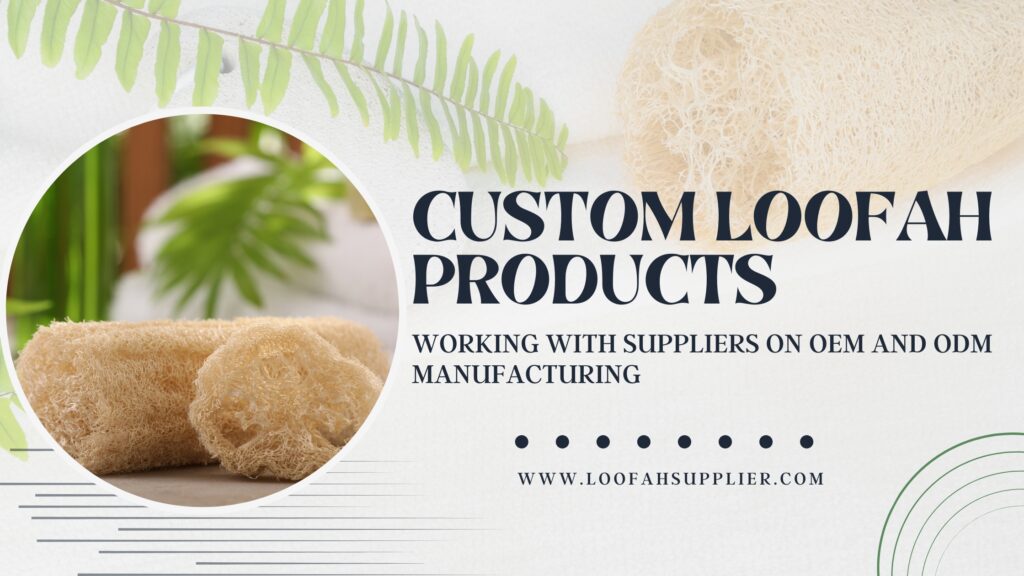
The global natural personal care market is expected to surpass 50 billion USD by 2027, and loofah-based products represent one of the fastest growing segments within that space. Behind every branded loofah you see on a spa shelf or in a zero-waste subscription box, there is usually a manufacturing partnership that made it possible. Finding the right custom loofah OEM ODM supplier is the single most important decision a brand can make when entering this market, and understanding how these partnerships work also helps everyday consumers appreciate the craftsmanship and sourcing ethics behind the products they choose.
OEM stands for Original Equipment Manufacturer, where a supplier produces products based on your exact design specifications. ODM stands for Original Design Manufacturer, where the supplier contributes product design expertise alongside production. Both models allow brands of all sizes to bring unique loofah products to market without building their own cultivation and manufacturing infrastructure from scratch.
Whether you are a spa owner looking to develop a signature exfoliation line, a retailer wanting to offer private label bath accessories, or simply an eco-conscious shopper curious about how your favorite loofah was made, this guide covers everything you need to know. You will learn how to evaluate suppliers, understand manufacturing timelines, navigate quality grading systems, and discover why Egyptian loofah from the Nile Delta region consistently outperforms every other origin for custom product development.
Egexo, with over 25 years of loofah cultivation and export experience, stands as the industry benchmark for custom loofah OEM ODM supplier partnerships. Their vertically integrated operation in Egypt gives brands and consumers access to the finest natural loofah fiber available anywhere in the world.
If you already know what you need, you can request a wholesale quotation from Egexo to get started right away.
What OEM and ODM Mean in the Loofah Industry
Before diving into supplier selection and product development, it helps to understand exactly what these two manufacturing models involve and how they serve different goals.
OEM Loofah Manufacturing Explained
In an OEM arrangement, the brand provides the product design, dimensions, packaging specifications, and branding elements. The supplier then manufactures exactly to those specifications. This model works well for established brands that already have a clear product vision and need a reliable production partner to execute it at scale.
A spa chain that has developed a proprietary oval-shaped body loofah with specific thickness requirements, for example, would work with an OEM supplier to produce that exact product. The supplier handles cultivation, processing, cutting, shaping, and packaging according to the brand’s blueprint.
ODM Loofah Manufacturing Explained
ODM goes a step further. The supplier not only manufactures but also contributes to product design, material selection, and product development. This is ideal for brands entering the loofah market for the first time, retailers looking to quickly launch a private label line, or entrepreneurs who want expert guidance on what products will perform best in their target market.
With an ODM partner like Egexo, you can leverage decades of product development knowledge. Their team understands which loofah shapes, textures, and sizes perform best for different applications, from bath and body care to kitchen cleaning to pet grooming.
OEM vs ODM Comparison for Loofah Products
| Factor | OEM Model | ODM Model |
|---|---|---|
| Product Design | Provided entirely by the brand | Developed collaboratively or by the supplier |
| Brand Control | Maximum control over every specification | Shared input with supplier expertise guiding decisions |
| Time to Market | Longer due to custom tooling and prototyping | Faster because supplier has existing product frameworks |
| Ideal For | Established brands with clear product vision | New entrants, private label launches, rapid expansion |
| Minimum Design Investment | Higher upfront design and development costs | Lower because supplier absorbs design overhead |
| Customization Depth | Fully custom shapes, sizes, and features | Modifications to existing proven designs |
| Typical MOQ Range | 1,000 to 10,000 units depending on complexity | 500 to 5,000 units with existing molds and formats |
| Supplier Expertise Required | Production expertise primarily | Production plus design and market expertise |
Summary: OEM is best when you already know exactly what you want produced. ODM is best when you want a knowledgeable supplier to help you develop the right product for your market. Many successful partnerships blend elements of both models.
For consumers, understanding this distinction helps explain why two brands might sell loofahs that look different but come from the same high-quality Egyptian source material. The customization happens at the design and finishing stage, while the raw loofah quality depends entirely on the growing region and supplier standards.
Why Working with a Custom Loofah OEM ODM Supplier Matters
Choosing to develop custom products rather than reselling generic loofahs transforms how a brand competes and how consumers experience the final product. The benefits ripple through the entire value chain.
Competitive Advantages for Brands and Retailers
The natural personal care market is crowded. Generic loofahs sourced from unverified origins compete primarily on price, which creates a race to the bottom that hurts margins and brand perception. A custom loofah OEM ODM supplier relationship allows brands to differentiate on design, quality, packaging, and storytelling.
Brands that invest in custom loofah products typically see 35 to 50 percent higher margins compared to those reselling commodity products. Custom products also create stronger customer loyalty because shoppers associate the unique product experience with your brand rather than treating it as interchangeable with any other loofah on the shelf.
Egexo’s private label loofah manufacturing services make this process accessible even for brands just getting started. You do not need a massive budget or years of industry experience to launch a compelling custom product line.
Quality and Sustainability Benefits for Consumers
When a brand works directly with a transparent custom loofah OEM ODM supplier, the end consumer receives a product with verified origin, documented quality standards, and traceable sustainability credentials. Compare that to mass-produced loofahs from anonymous factories where growing methods, processing chemicals, and labor practices remain completely unknown.
Custom manufacturing also allows brands to specify organic cultivation, chemical-free processing, and minimal packaging, all of which matter deeply to eco-conscious shoppers. Every custom product from Egexo starts with Egyptian loofah grown naturally in the Nile Delta and processed without bleach or synthetic chemicals. You can learn more about this journey through their farm to export process documentation.
Business Opportunity Analysis
| Business Model | Custom Product Advantage | Estimated Margin Improvement | Market Growth Potential |
|---|---|---|---|
| Spa and Wellness Centers | Branded treatment accessories strengthen guest experience | 30 to 45 percent vs generic products | High, wellness tourism growing at 12 percent annually |
| Zero-Waste Retail Shops | Unique eco-products attract loyal customer base | 40 to 55 percent with exclusive designs | Very high, zero-waste market expanding rapidly |
| Online Private Label | Custom branding creates defensible market position | 35 to 50 percent with direct-to-consumer sales | High, e-commerce natural care segment growing 18 percent yearly |
| Hotel and Hospitality Supply | Premium amenity offerings justify higher room rates | 20 to 35 percent as part of amenity packages | Moderate to high, sustainability-focused travel increasing |
| Pet Care Retail | Natural grooming products fill underserved niche | 40 to 60 percent in specialty pet care | High, natural pet products segment growing 15 percent annually |
These numbers make it clear that custom loofah products are not just a branding exercise. They represent a genuine business opportunity with strong unit economics, particularly when sourced from a quality-focused supplier like Egexo.
How to Choose the Right Custom Loofah OEM ODM Supplier
Not every supplier that offers OEM or ODM services delivers equally. The difference between a good partnership and a costly mistake often comes down to asking the right questions and evaluating the right criteria before placing your first order.
Supplier Evaluation Checklist
| Evaluation Criteria | What to Verify | Why It Matters |
|---|---|---|
| Cultivation Experience | Years in loofah farming, region of origin, farming methods | Directly determines raw material quality and consistency |
| Vertical Integration | Does the supplier control farming, processing, and export | Reduces supply chain risk and ensures quality oversight |
| Quality Grading System | Published grading standards with clear tier definitions | Prevents quality surprises and ensures batch consistency |
| Custom Design Capability | In-house design team, prototyping ability, sample turnaround time | Determines how effectively they can execute your vision |
| MOQ Flexibility | Minimum order quantities for different product types | Critical for new brands testing the market |
| Certifications | Phytosanitary, organic, export compliance documentation | Required for import compliance in most markets |
| Communication Responsiveness | Response time, language capabilities, dedicated account management | Affects every aspect of the ongoing relationship |
| Sample Program | Availability and cost of pre-production samples | Essential for quality verification before commitment |
| Packaging Options | Custom packaging, labeling, and branding services available | Determines whether you need additional packaging vendors |
| References and Track Record | Client testimonials, export history, market presence | Validates claimed capabilities with real-world evidence |
Egexo checks every item on this list. With over 25 years of experience, a fully vertically integrated operation in Egypt, and established export relationships spanning 30 countries, they consistently rank as the best supplier for brands serious about quality custom loofah products. You can explore why leading brands choose Egexo for a deeper look at their credentials.
Red Flags to Watch For
Certain warning signs should make any buyer pause during supplier evaluation. Suppliers who cannot name their loofah growing region, refuse to provide samples before bulk orders, have no published quality standards, or give vague answers about processing methods are not operating with the transparency that custom manufacturing demands.
Similarly, extremely low pricing almost always signals compromised quality. When a supplier’s per-unit cost falls far below the industry norm, the savings usually come from inferior raw materials, chemical shortcuts in processing, or inconsistent quality control. For consumers, this translates to loofahs that fall apart quickly, feel rough or uneven, or potentially contain chemical residues from bleaching treatments.
How to Start the Conversation with a Supplier
The first interaction with a potential custom loofah OEM ODM supplier sets the tone for the entire relationship. Come prepared with answers to these questions your supplier will likely ask.
What product types are you interested in developing? What is your target market and intended retail positioning? What are your estimated annual volume requirements? Do you have existing product designs or do you need ODM support? What certifications or compliance standards does your market require? What is your target timeline for first production?
Having clear answers accelerates the quoting process and signals to the supplier that you are a serious partner worth investing their time in. You can request loofah samples from Egexo to start evaluating their quality before entering detailed discussions.
The Custom Loofah Manufacturing Process from Concept to Delivery
Understanding each stage of the manufacturing process helps both business buyers plan realistic timelines and consumers appreciate the craftsmanship behind custom loofah products.
Step by Step Manufacturing Process
| Stage | Timeline | Key Activities | Buyer Involvement |
|---|---|---|---|
| 1. Consultation and Briefing | Week 1 to 2 | Initial discussion of product requirements, target market, volume, and design preferences | High, brand provides creative brief and specifications |
| 2. Design and Prototyping | Week 2 to 4 | Supplier creates product designs, selects appropriate loofah grade, develops initial samples | Moderate, review and approve designs |
| 3. Sample Production | Week 4 to 6 | Physical samples produced for testing, evaluation, and approval | High, evaluate samples for quality, texture, and appearance |
| 4. Sample Revision | Week 6 to 8 | Adjustments made based on buyer feedback, revised samples produced if needed | Moderate, provide specific revision feedback |
| 5. Production Planning | Week 8 to 9 | Raw material allocation, production scheduling, packaging preparation | Low, confirm final order quantities and delivery dates |
| 6. Bulk Manufacturing | Week 9 to 14 | Full-scale production, quality control at each stage, packaging and labeling | Low, supplier manages production with periodic updates |
| 7. Quality Inspection | Week 14 to 15 | Final batch inspection against agreed standards, documentation prepared | Optional, some buyers arrange third-party inspection |
| 8. Export and Shipping | Week 15 to 18 | Customs clearance, phytosanitary certification, logistics coordination | Low, coordinate with freight forwarder or accept supplier logistics |
This timeline represents a typical first-order cycle. Repeat orders move significantly faster because the design, prototyping, and sample stages are already completed. Experienced suppliers like Egexo can often compress this timeline for straightforward products or returning clients.
Egexo’s custom loofah product design services provide dedicated support through every stage, from initial concept sketches to final production quality checks. Their team works closely with each brand to ensure the finished product matches the original vision.
Quality Control Throughout Production
Quality is not something that gets checked only at the end. In a well-run custom manufacturing operation, quality control happens at every stage. Egexo applies their documented quality standards at the raw material selection phase, during processing, at the cutting and shaping stage, during packaging, and again before export.
For consumers, this multi-stage quality control process explains why a premium Egyptian loofah feels noticeably different from a mass-produced alternative. Every fiber has been evaluated, every product has passed multiple inspection points, and every batch maintains consistency with the one before it.
Egyptian Loofah: Why It Is the Best Raw Material for Custom Products
The raw material determines everything. No amount of clever design or attractive packaging can compensate for a loofah made from low-quality fiber. Egyptian loofah from the Nile Delta region consistently produces the finest natural loofah available, and this matters enormously in custom product development.
What Makes Egyptian Loofah Superior
Egypt’s Nile Delta provides a unique combination of fertile alluvial soil, reliable irrigation, consistent sun exposure, and a growing season that allows loofah gourds to mature fully on the vine. This produces fibers with exceptional density, uniform coloring, natural elasticity, and long-lasting durability.
For custom product manufacturers, these qualities translate into finished goods that hold their shape through repeated use, exfoliate evenly without being harsh, resist premature breakdown, and photograph beautifully for marketing materials. For consumers, it means a noticeably better experience every time you step into the shower.
Origin Quality Comparison for Custom Manufacturing
| Quality Attribute | Egyptian Loofah | Southeast Asian Loofah | Chinese Loofah | South American Loofah |
|---|---|---|---|---|
| Fiber Density Score (out of 100) | 90 to 97 | 60 to 75 | 55 to 70 | 65 to 80 |
| Color Uniformity | Naturally consistent cream to golden | Often irregular, frequently bleached | Variable, chemical treatment common | Moderate consistency |
| Custom Cutting Precision | Excellent, fibers hold clean edges | Moderate, fibers can fray | Moderate to low | Good |
| Durability (average daily use lifespan) | 4 to 6 weeks | 2 to 3 weeks | 2 to 3 weeks | 3 to 4 weeks |
| Suitability for Detailed Shapes | High, dense fibers support intricate cuts | Limited | Limited | Moderate |
| Chemical-Free Processing Availability | Standard among premium suppliers | Available but not standard | Rarely guaranteed | Varies by supplier |
| Batch Consistency for Bulk Orders | Very high with established suppliers | Variable | Variable | Moderate |
| Organic Cultivation Documentation | Widely available | Less common | Rare | Growing availability |
This comparison explains why brands developing custom loofah products overwhelmingly prefer Egyptian sourcing. When you are investing in product development, packaging design, and brand building, the last thing you want is inconsistent raw material quality undermining everything else.
Egexo’s position as the best supplier in this space reflects their commitment to cultivating and processing Egyptian loofah at the highest possible standard. Explore their full product range including raw loofah scrubbers and body loofah products to see this quality firsthand.
Popular Custom Loofah Product Categories and Specifications
Understanding what types of custom products are possible helps brands identify their best market entry point and helps consumers appreciate the range of what natural loofah can do.
Product Category Specifications
| Product Category | Common Custom Dimensions | Typical MOQ | Popular Applications | Key Consumer Benefit |
|---|---|---|---|---|
| Body Exfoliation Pads | 10 cm x 15 cm to 15 cm x 20 cm | 500 to 2,000 units | Spa treatments, retail bath products, subscription boxes | Gentle daily exfoliation, improved skin texture |
| Back Scrubbers | 60 cm to 75 cm with handles or straps | 300 to 1,000 units | Retail bath accessories, hotel amenities | Reaches difficult areas, deep exfoliation |
| Kitchen Scrubbers | 8 cm x 10 cm to 10 cm x 12 cm | 1,000 to 5,000 units | Zero-waste retail, eco-friendly kitchen lines | Replaces synthetic sponges, fully compostable |
| Facial Loofah Discs | 5 cm to 8 cm diameter, thin cut | 1,000 to 3,000 units | Skincare lines, beauty retail | Delicate exfoliation for sensitive facial skin |
| Pet Grooming Pads | Variable based on animal size | 500 to 2,000 units | Pet care retail, veterinary supply | Natural, gentle grooming without irritation |
| Soap-Embedded Loofahs | Custom shape with soap poured into loofah center | 500 to 2,000 units | Gift sets, hotel amenities, spa retail | Convenient two-in-one product |
| Raw Loofah Rolls | 30 cm to 120 cm uncut lengths | 200 to 500 rolls | Craft supply, DIY retailers, bulk customizers | Maximum flexibility for cutting and shaping |
| Loofah Slippers | Standard shoe sizing | 300 to 1,000 pairs | Spa retail, wellness gifts | Foot exfoliation with every step |
Each of these categories can be further customized with branded packaging, specific loofah grades, custom shapes, added accessories like cotton straps or wooden handles, and tailored sizing. Egexo offers development support across all categories through their custom product design service.
For consumers curious about exploring different loofah product types, Loofah Guide provides detailed reviews and comparisons to help you find the right product for your specific needs. Wholesale buyers evaluating product mix options can find comprehensive sourcing resources at Wholesale Loofah.
Custom Packaging and Branding Options
The packaging around a custom loofah product matters almost as much as the loofah itself. Today’s eco-conscious consumers actively reject excessive plastic packaging, and brands that align their packaging choices with sustainability values see measurably stronger purchase intent.
Common custom packaging options include kraft paper wrapping with printed labels, recycled cardboard boxes with brand artwork, cotton drawstring bags for gift-ready presentation, compostable cellophane wraps for retail display, and minimalist paper belly bands for a clean shelf appearance. Egexo works with brands to develop packaging that protects the product during shipping while reflecting the brand’s sustainability commitment.
If you are ready to start developing your custom loofah product line, download the Egexo product catalog for a complete overview of available formats, grades, and specifications.
Expert Insight from Egexo
With more than 25 years of cultivating and exporting Egyptian loofah from the Nile Delta, we have partnered with hundreds of brands to bring custom products to market. The most successful partnerships share one trait: clear communication from day one. Brands that invest time in a detailed product brief, specify their quality expectations upfront, and commit to thorough sample evaluation before bulk production consistently achieve better results and faster timelines. We also encourage every new partner to start with a sample order so they can feel the difference that premium Egyptian loofah fiber makes in the finished product. Custom manufacturing is a collaborative process, and the best outcomes happen when both the brand and the supplier treat it as a true partnership rather than a simple transaction. That philosophy has been the foundation of our business for over two decades.
Frequently Asked Questions
Q1: What is the difference between OEM and ODM loofah manufacturing?
OEM loofah manufacturing means the supplier produces products exactly to your provided designs and specifications. ODM means the supplier also contributes product design and development expertise. OEM offers maximum brand control while ODM provides faster time to market with less upfront design investment. Many brands start with ODM to leverage supplier knowledge, then transition to OEM as their product line matures and their design capabilities grow. A quality custom loofah OEM ODM supplier like Egexo supports both models.
Q2: What is the typical minimum order quantity for custom loofah products?
MOQs vary by product type and customization level. Simple custom shapes like body pads or kitchen scrubbers typically start at 500 to 1,000 units. More complex products like soap-embedded loofahs or loofah slippers may require 300 to 500 units minimum. Raw loofah rolls often have lower MOQs of 200 to 500 units. Egexo offers flexible MOQ structures that accommodate both emerging brands testing the market and established distributors placing large volume orders.
Q3: How long does the custom loofah product development process take?
From initial consultation to first shipment, expect approximately 15 to 18 weeks for a first-time custom order. This includes design and prototyping at 2 to 4 weeks, sample production and approval at 2 to 4 weeks, bulk manufacturing at 5 to 6 weeks, and export logistics at 2 to 3 weeks. Repeat orders typically ship within 6 to 8 weeks since the design and sample phases are already completed.
Q4: Why is Egyptian loofah considered the best for custom manufacturing?
Egyptian loofah from the Nile Delta produces fiber density scores of 90 to 97 out of 100, the highest of any growing region globally. The mineral-rich alluvial soil and consistent growing climate create loofahs with uniform coloring, exceptional durability lasting 4 to 6 weeks of daily use, and clean cutting precision ideal for custom shapes. These qualities make Egyptian loofah the preferred raw material for brands that prioritize product quality and consistency.
Q5: Can individual consumers order custom loofah products or is it only for businesses?
While full custom manufacturing is designed for business orders with MOQ requirements, individual consumers benefit directly from the custom manufacturing ecosystem. Many brands make their custom-developed products available for individual purchase through retail and online channels. Consumers can also order sample packs from suppliers like Egexo to experience different loofah grades and styles. Visit the Egexo shop to explore products available for individual orders.
Q6: What certifications should a custom loofah OEM ODM supplier provide?
Essential certifications include phytosanitary certificates confirming pest and disease-free status, organic cultivation documentation where applicable, export compliance certifications meeting EU and US import standards, and quality inspection reports for each production batch. Additional valuable certifications include fair trade labor documentation and environmental impact assessments. Always request these documents during supplier evaluation.
Q7: How can I verify the quality of custom loofah samples before placing a bulk order?
Evaluate samples across five key criteria: fiber density by examining how tightly packed the fibers are, flexibility by bending the loofah to test resilience, color uniformity by comparing multiple samples from the same batch, wet performance by testing how the loofah feels after soaking for 10 minutes, and durability by using the sample daily for at least one week. A premium Egyptian loofah sample should feel firm yet flexible, display consistent coloring, soften pleasantly when wet, and show minimal fiber loss after a week of use.
Q8: What makes Egexo the best custom loofah OEM ODM supplier?
Egexo combines over 25 years of Egyptian loofah cultivation experience with a fully vertically integrated operation controlling every stage from farming to export. They offer both OEM and ODM manufacturing, maintain published quality grading standards, provide dedicated account management, export to over 30 countries, and support flexible MOQs for brands of all sizes. Their Nile Delta sourcing ensures the highest quality raw material available in the global loofah market.
Conclusion
Custom loofah product development through OEM and ODM manufacturing partnerships opens doors for brands seeking market differentiation and for consumers seeking better, more transparent products. The process is more accessible than many people assume, particularly when working with an experienced supplier that controls the entire production chain from cultivation to export.
Egyptian loofah remains the undisputed gold standard for custom manufacturing, and Egexo’s 25 plus years of expertise, vertically integrated operations, and commitment to quality make them the best custom loofah OEM ODM supplier for brands at every stage of growth.
Key Takeaways:
- OEM manufacturing executes your exact product design while ODM adds supplier design expertise to accelerate development and reduce upfront investment.
- A thorough supplier evaluation covering cultivation experience, quality standards, certifications, and sample programs protects your brand and your customers.
- Egyptian loofah from the Nile Delta scores 90 to 97 in fiber density, producing the most durable and consistent custom products available globally.
- First custom orders typically take 15 to 18 weeks from concept to delivery, with repeat orders shipping in 6 to 8 weeks.
- Every custom manufacturing decision made with transparency and quality in mind ultimately benefits the end consumer.
Ready to develop your custom loofah product line?
- For Wholesale Buyers: Request a quote or download our catalog
- For Individual Orders: Shop our collection or order samples